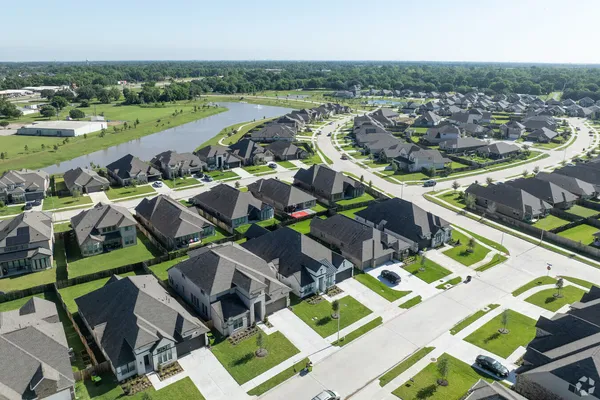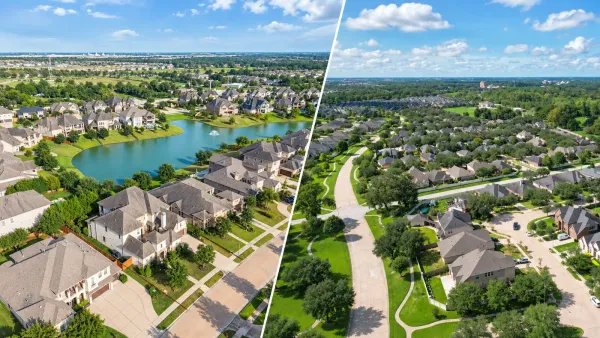
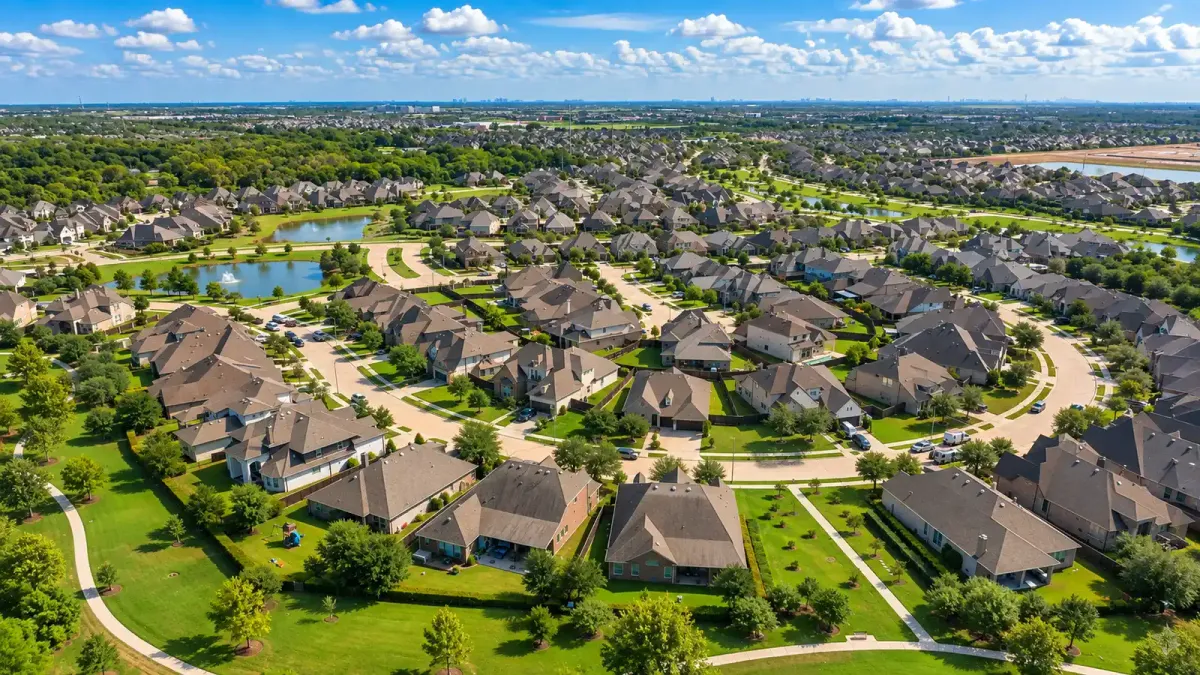
Richmond, Texas gives you more house and more land per dollar than Katy or Sugar Land, strong Lamar CISD schools, and a downtown with actual history behind it. The trade-offs are MUD taxes that can erase the price advantage on your monthly payment, and a downtown Houston commute that runs 50 to 75 minutes at peak. Here’s the honest version of both sides.
I’m Miguel Gutierrez with Texas Homes Sold Group, and I live and work right here in Fort Bend County. This isn’t secondhand information pulled off a builder brochure. If you’re looking at the west or southwest side of Houston, Richmond keeps showing up on your list for good reason, and it is one of the fastest growing areas in the entire state right now. But fast growth creates real trade-offs, and you should know both halves before you commit.
Let’s start with what Richmond gets right.
Pro 1: Your money goes further here
Take a $450,000 to $500,000 budget into Katy or Sugar Land and you will find a nice home. You will also be looking at a smaller lot, and you will be paying a premium on price per square foot for the address.
That same budget stretches noticeably further in Richmond. Bigger lots. More square footage. Sometimes a three-car garage or upgraded finishes that you would pay extra for in a bigger-name suburb.
And you are not giving up the fundamentals to get it. You still get what Fort Bend County offers, including good schools and good access to the metro. You’re just not paying the big-name suburb tax. If you want to see how that plays out head to head, I broke down the same budget in both markets in our Katy vs Richmond comparison.
Pro 2: The new communities here are genuinely different
This is one of my favorite things about the Richmond market right now. The master-planned communities coming online are not the usual template.
Harvest Green is the clearest example. It’s an agrihood, 1,700 acres built around an actual working farm. Residents get garden plots. There are farm-to-table events. There are resort-style pools and the full amenity package on top of it. It is not a cookie-cutter neighborhood, and buyers notice that the moment they drive in.
More is coming. The George, from Johnson Development, is going up on roughly 1,500 acres along FM 2977. Indigo is another one worth watching, built around a working farm and pasture of its own with a walkable town center at the middle of it.
Here’s the part that matters if you’re timing a purchase. Buying into one of these communities early puts you on the ground floor, before the equity really starts moving. That’s a different position than buying into a community that finished building out a decade ago. If you’re weighing builders and phases, here’s more on buying new construction in Fort Bend County.
Pro 3: Strong schools without the sticker shock
Most of Richmond falls under Lamar Consolidated ISD, and this district does not get talked about enough. It is consistently one of the fastest growing and best performing districts in Texas, ranking in the top 20 percent for academic proficiency.
What that growth buys you is concrete: brand new campuses, strong academics, solid athletics.
What it doesn’t come with is the home price premium attached to a district like Katy ISD. Families in Lamar CISD are getting an excellent education without paying extra on the purchase price to access it. For buyers who care about resale as much as report cards, that gap is worth understanding.
Pro 4: Real history and real character
Richmond isn’t another suburb that appeared in the last 20 years. Downtown Richmond has actual history. Brick storefronts. Local coffee shops. And Richmond is the county seat of Fort Bend County, so there are real government and community roots here, not just rooftops.
George Ranch Historical Park adds to that. It’s a working living history ranch, and it gives the area an identity you won’t find in most newer master-planned suburbs.
It feels like a town. Not a collection of subdivisions with a monument sign at the entrance.
Now the cons, because they’re real
Con 1: MUD taxes can erase the price advantage
This is the one buyers miss most often, and it costs them. A lower price tag does not automatically mean a lower monthly payment.
Newer communities in Richmond typically rely on a Municipal Utility District, a MUD, to pay for water, sewer, and road infrastructure. The MUD levies its own tax on top of everything else. In practice, total tax rates in some of these communities run 2.8 to 3.4 percent or higher.
Run that math and it gets uncomfortable. A $450,000 home with a high MUD rate can carry the same monthly cost as a $500,000 home in an older neighborhood with a lower total rate. The cheaper house isn’t cheaper.
| What you compare | What it actually tells you |
|---|---|
| Purchase price | Only part of the picture |
| Property tax rate | Varies by county, city, and school district |
| MUD rate | Varies community to community, can swing the payment by hundreds |
| HOA dues | Higher in amenity-heavy master plans |
| Total monthly payment | The number that decides what you can afford |
My advice is simple. Don’t shop on sticker price. Add up principal, interest, property taxes, MUD taxes, and HOA fees, and compare that number across communities. Rates are public record through the Fort Bend Central Appraisal District, and I’ll run them for any community you’re considering.
Con 2: Be honest with yourself about the commute
If you work in Sugar Land or the Energy Corridor, Richmond’s position off Highway 99 and the Westpark Tollway is genuinely convenient. That’s a strength.
If your job is downtown Houston or out at the Medical Center, I’m not going to sugarcoat it. Rush hour on the Westpark Tollway or 59 can be rough. You could be looking at 50 to 75 minutes or more each way at peak.
That’s not a reason to rule Richmond out. It is a reason to think it through honestly, and to find out whether a hybrid schedule is on the table, before you sign anything.
Con 3: Road construction is still catching up
Richmond is growing fast, and the roads are still catching up to the rooftops. FM 359, FM 2977, and some of the Grand Parkway connectors have ongoing construction and bottlenecks that come with it.
If you move into a brand new section of a community, plan on living near active construction for a couple of years while the rest of it finishes out. Some buyers don’t mind. Some are surprised by it six months in, which is worse.
Con 4: Shopping and dining are still filling in
The basics are covered. H-E-B, Kroger, the everyday errands, all here.
Upscale dining and specialty shopping are a different story. A lot of that is still concentrated over in Sugar Land or Katy. Expect to drive 10 or 15 minutes for a nice dinner out or a specific store. That’s a minor annoyance for some people and a genuine dealbreaker for others, so be honest about which one you are.
Who Richmond is right for
Richmond is a strong fit if you want the most house and the most land for your money, you’re excited about new construction and modern community amenities like agrihoods, and you want strong schools without paying the premium that comes with a more established district. It also works well if you work locally in Fort Bend County, out in the Energy Corridor, or from home.
Richmond is probably the wrong call if you have a strict daily commute into downtown Houston and traffic is a dealbreaker, or if you want a fully built-out mature neighborhood where construction wrapped up 15 years ago. Those buyers are usually happier somewhere else, and I’d rather tell you that now than after you close.
The right community comes down to your lifestyle, your family’s needs, and your budget. Nothing else.
Frequently Asked Questions
Is Richmond, Texas a good place to live?
Richmond is a good fit for buyers who want more square footage and lot size per dollar than Katy or Sugar Land, along with strong Lamar CISD schools and a downtown with real history. It’s a weaker fit for daily downtown Houston commuters and for anyone who wants a fully mature neighborhood with no active construction nearby.
Why are homes in Richmond cheaper than in Katy or Sugar Land?
Richmond homes cost less per square foot mainly because the area doesn’t carry the same name recognition premium as Katy or Sugar Land. At a $450,000 to $500,000 budget in Richmond, buyers typically get a bigger lot, more square footage, and sometimes upgrades like a three-car garage. The savings can narrow once MUD taxes are factored into the monthly payment.
What are MUD taxes in Richmond, Texas?
A MUD, or Municipal Utility District, is a special taxing district that funds water, sewer, and road infrastructure in newer master-planned communities, and it charges its own rate on top of county, city, and school taxes. In some Richmond communities the combined rate reaches 2.8 to 3.4 percent or higher. That means a $450,000 home with a high MUD rate can cost the same each month as a $500,000 home with a lower rate.
What school district serves Richmond, Texas?
Most of Richmond is served by Lamar Consolidated ISD, usually shortened to Lamar CISD. It ranks among the fastest growing and best performing districts in Texas, in the top 20 percent for academic proficiency, and its growth has funded new campuses and updated facilities. Families get that quality without the home price premium attached to a district like Katy ISD.
How long is the commute from Richmond to downtown Houston?
Expect 50 to 75 minutes or more each way during peak traffic, using the Westpark Tollway or US 59. Commutes to Sugar Land and the Energy Corridor are considerably easier thanks to Richmond’s position on Highway 99 and the Westpark Tollway. If downtown is your daily destination, check whether a hybrid schedule is possible before you buy.
What new master-planned communities are being built in Richmond?
Harvest Green is an established 1,700-acre agrihood built around a working farm, with garden plots, farm-to-table events, and resort-style pools. The George, from Johnson Development, is going up on roughly 1,500 acres along FM 2977, and Indigo is another agrihood-style community worth watching. Buying into these early tends to be the better position on equity.
Should I use a local agent to compare Richmond communities?
It helps more here than in most markets, because the differences that matter in Richmond are not visible on a listing. MUD rates, which sections are still under construction, and how far out a community’s build-out runs all affect your cost and your resale, and none of it shows up in the price. We live and work in Fort Bend County and run those numbers before our clients tour, not after.
Let’s run your actual numbers
If you’re weighing Richmond against Fulshear, Katy, or anywhere else in Fort Bend County, don’t guess at it. Send me your budget and your commute and I’ll put together a real comparison, with the full monthly payment on each so the MUD difference is visible before you fall in love with a floor plan.
Start by searching for homes in Fort Bend County, read more on our Richmond community page, or schedule a consultation and we’ll go through it together. New to the process? Start with buying a home in the Houston area. Jacob and I work these markets every single day, and we also help clients in Spanish.